
A Glen Rock redeck, and what the old frame was really doing
Same footprint, same structure, new boards and railings. Then the old decking came off — loose railing posts, missing blocking, stairs sitting on dirt, and no joist tape anywhere.
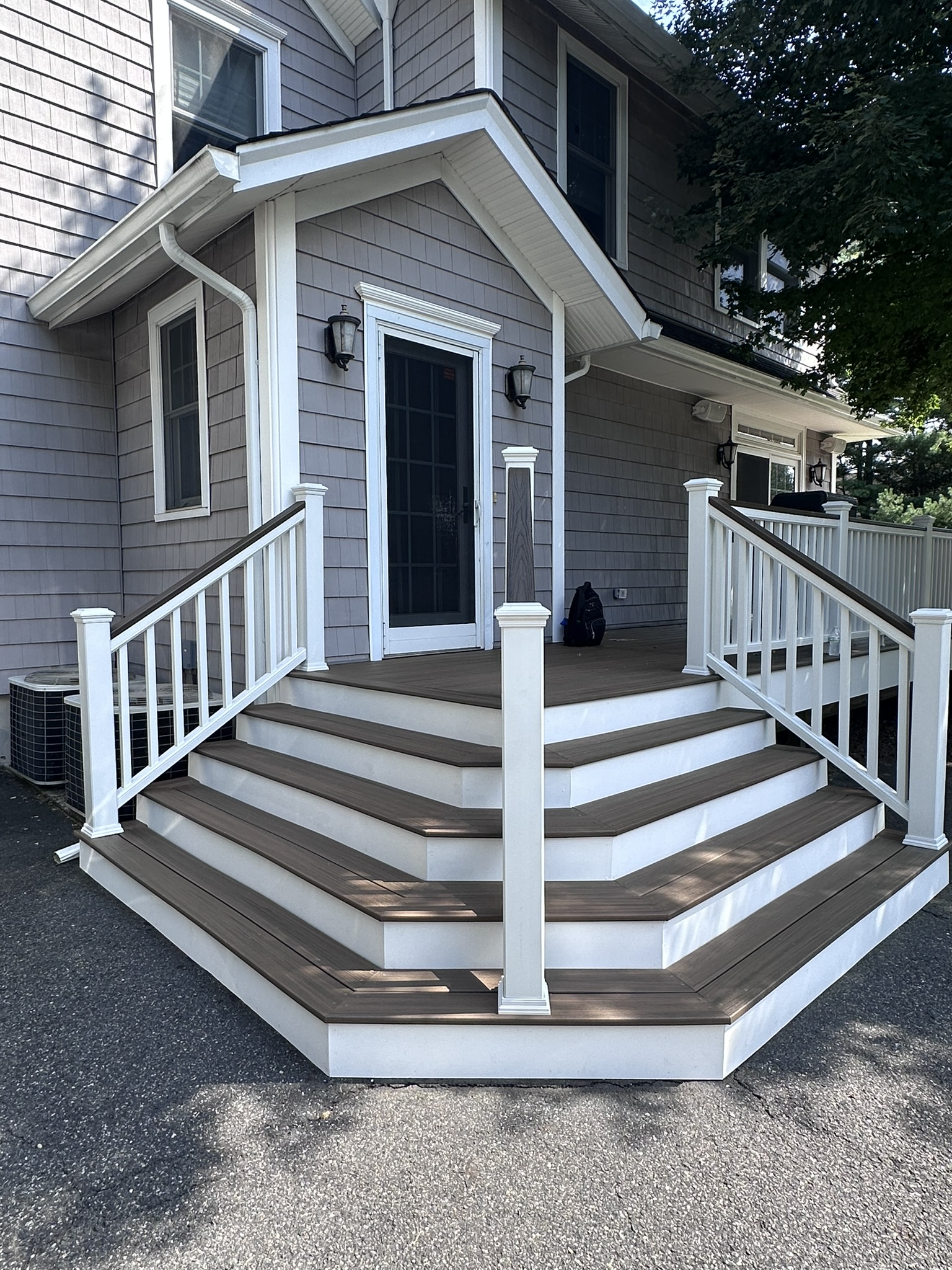
A redeck is a surface job — until you take the surface off
The deck was already there, in the footprint and layout it has now. The brief was straightforward: new decking, new railings. Nothing about it looked like a structural job from the driveway.
Then the old boards came up, and the frame underneath showed what it had actually been doing:
- Loose 4×4 railing posts. A guard is fall protection, not trim. A post you can move by hand is a railing that is not doing the one thing it exists to do
- Missing blocking between the joists, so the frame had nothing holding it square and nothing solid behind the posts
- Stairs sitting directly on dirt — no bearing, so they were free to rot from the bottom and settle out of level
- No joist tape. Nothing protecting the top of any joist from the water that runs between deck boards
All of it was put right before a single new board went down.
Why the frame had to be right first
This is the part worth understanding if you are getting redeck quotes. Composite decking is a long-life product — it is bought precisely because it does not rot and does not need refinishing every couple of years. Screw that onto a frame with no joist tape and you have built a mismatch: the surface will still be sound in twenty years and the wood underneath it will not.
Water gets between deck boards. It always does. On an untaped frame it sits on the top edge of every joist, which is exactly where a joist rots first. What that buys you, eventually, is the worst job in decking — stripping a perfectly good composite surface to replace the frame that was never protected.
So the posts were made solid, the blocking went in, the stairs were given proper bearing instead of soil, and every joist was taped before the Trex went down. None of that shows in a photograph. It is the difference between a deck that lasts as long as its decking and one that does not.
The custom entry stairs
The one part of this deck that was not a replacement.
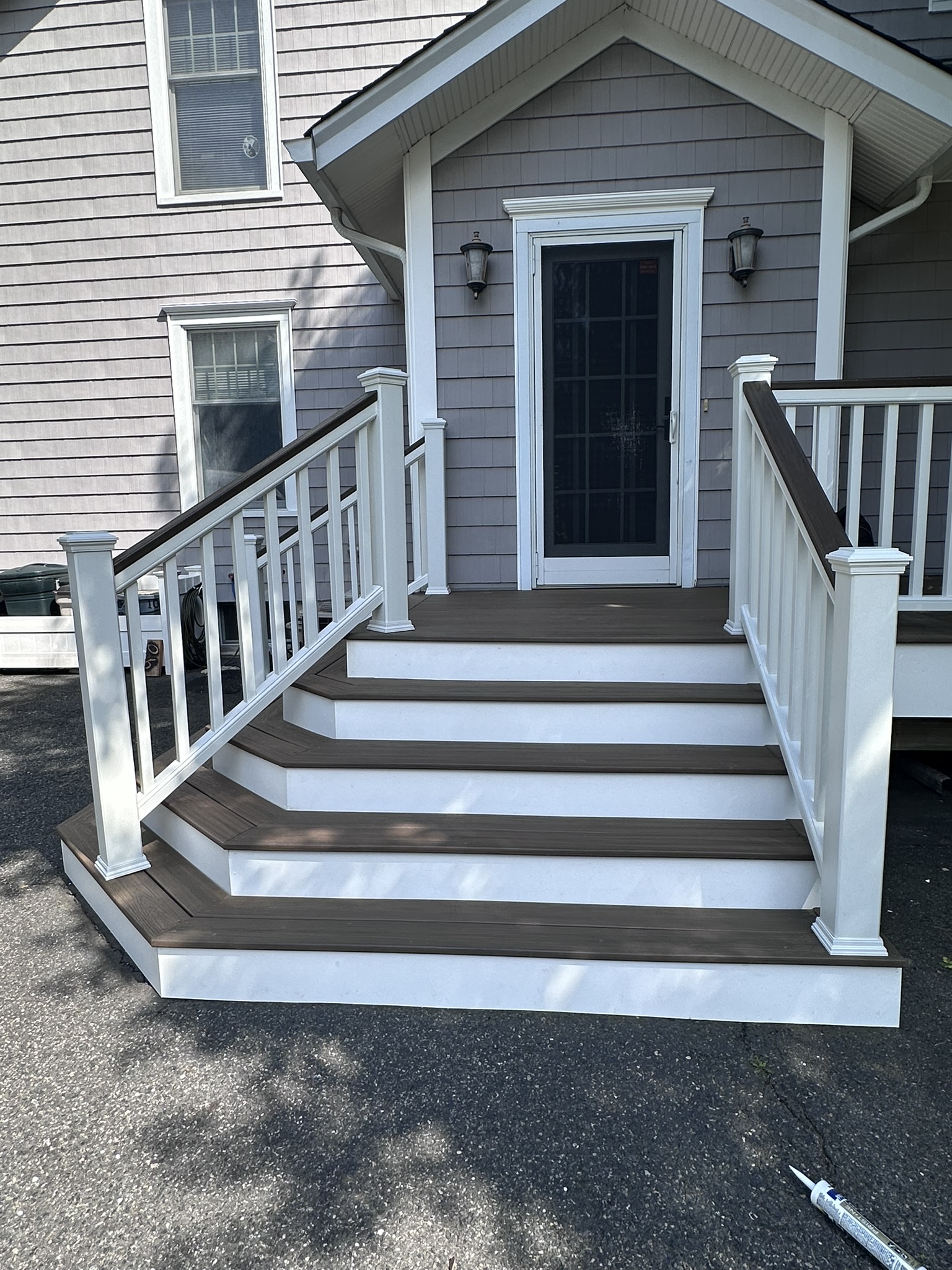
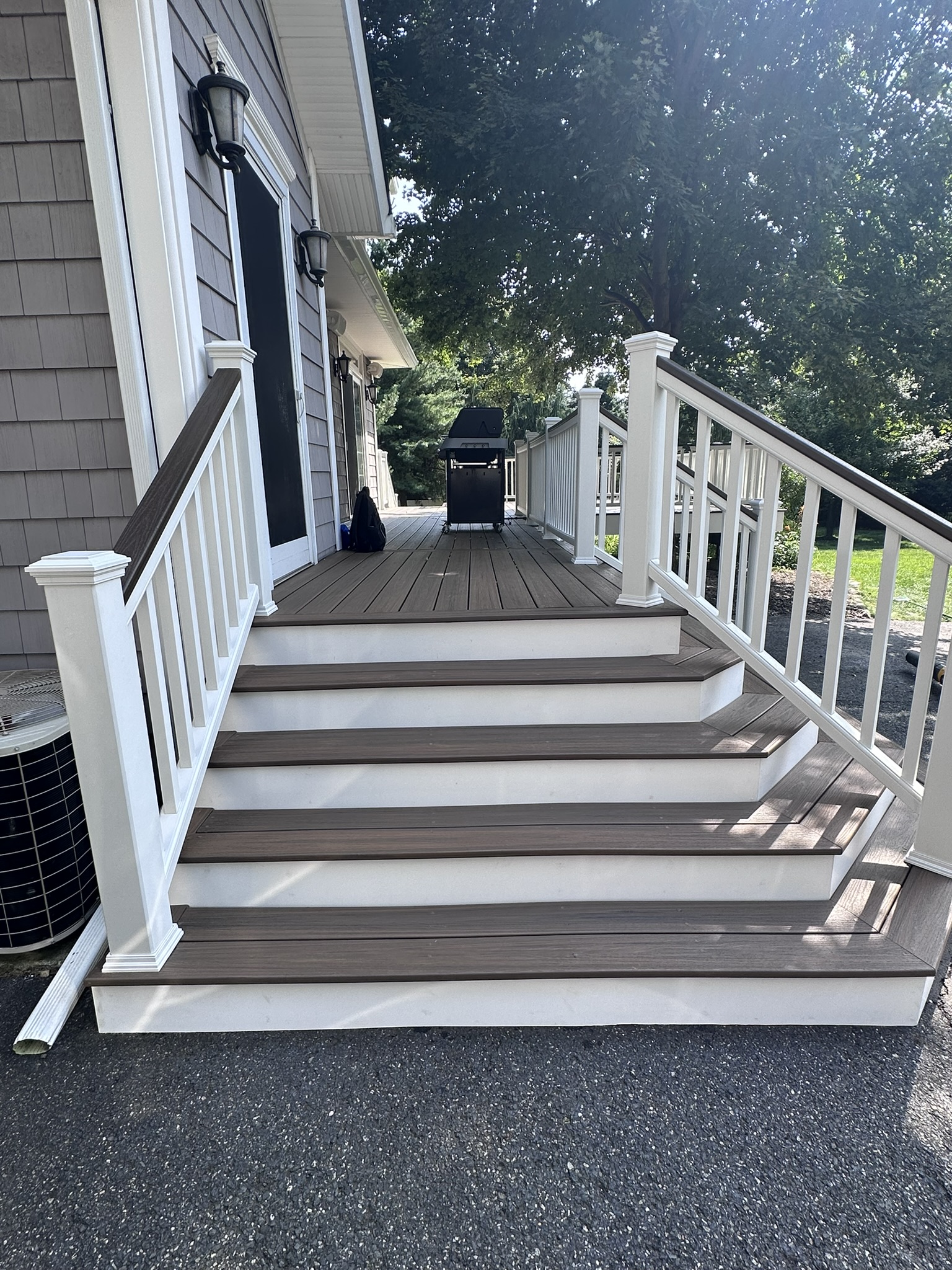
The entrance was built as a cascading stair — the treads widening and wrapping the corner as they come down, rather than a straight flight boxed in by stringers. It is a better way to arrive at a house and a considerably harder thing to build: every tread is a different length, the mitres close on angles that are not square, and the cocktail board has to follow the whole thing around and still land clean at the newel posts.
Why Transcend on the rail and Enhance underfoot
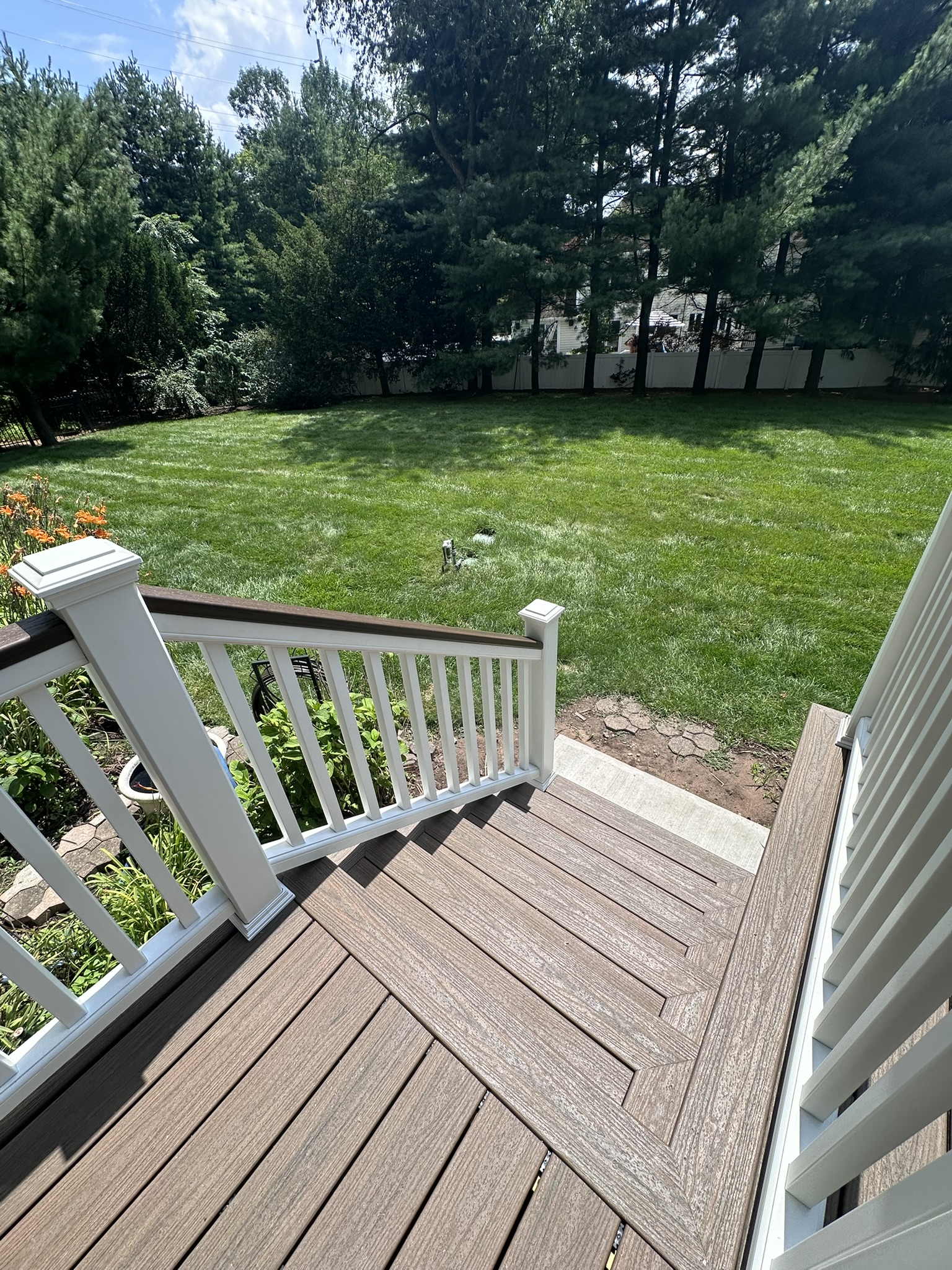
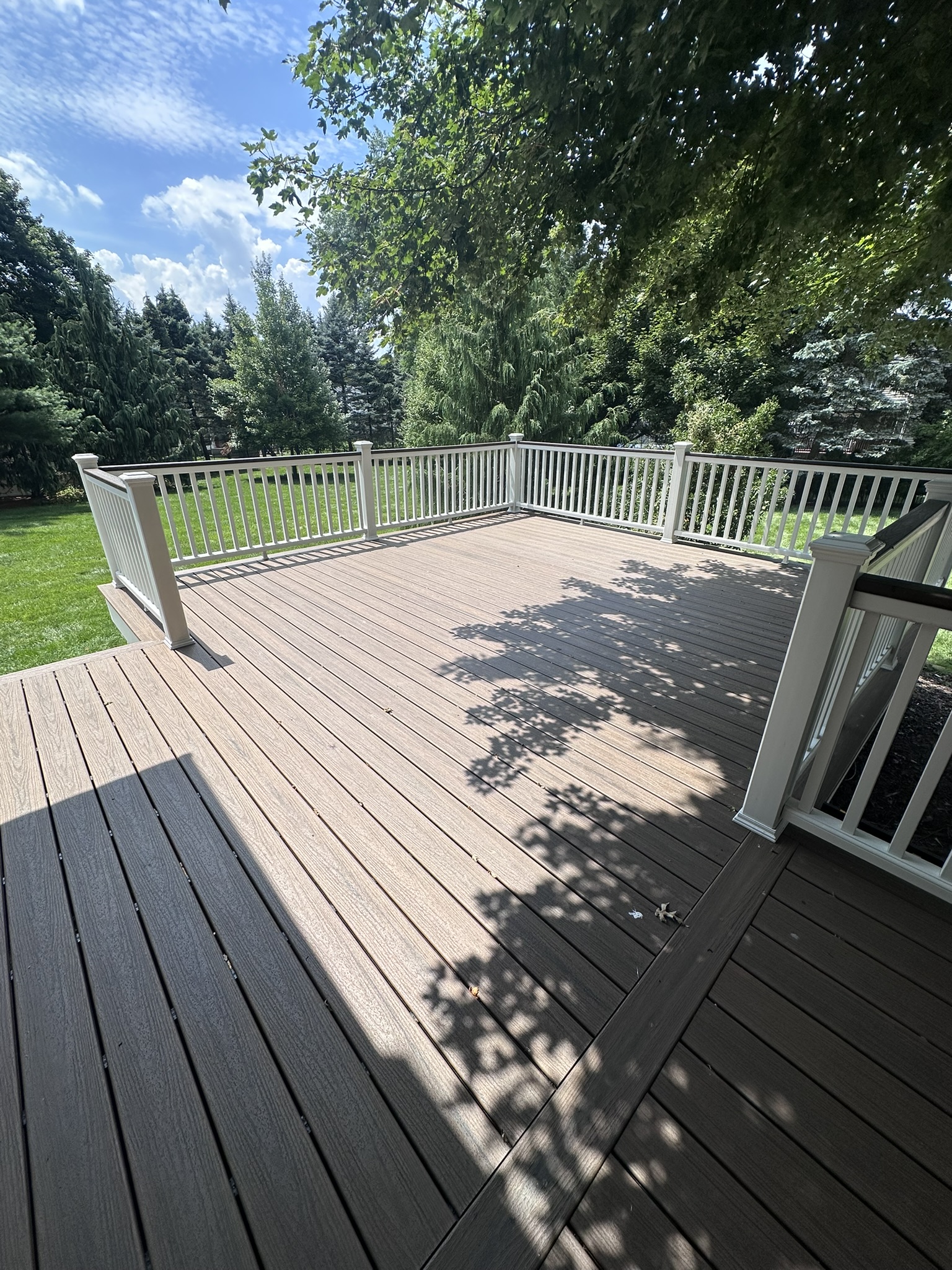
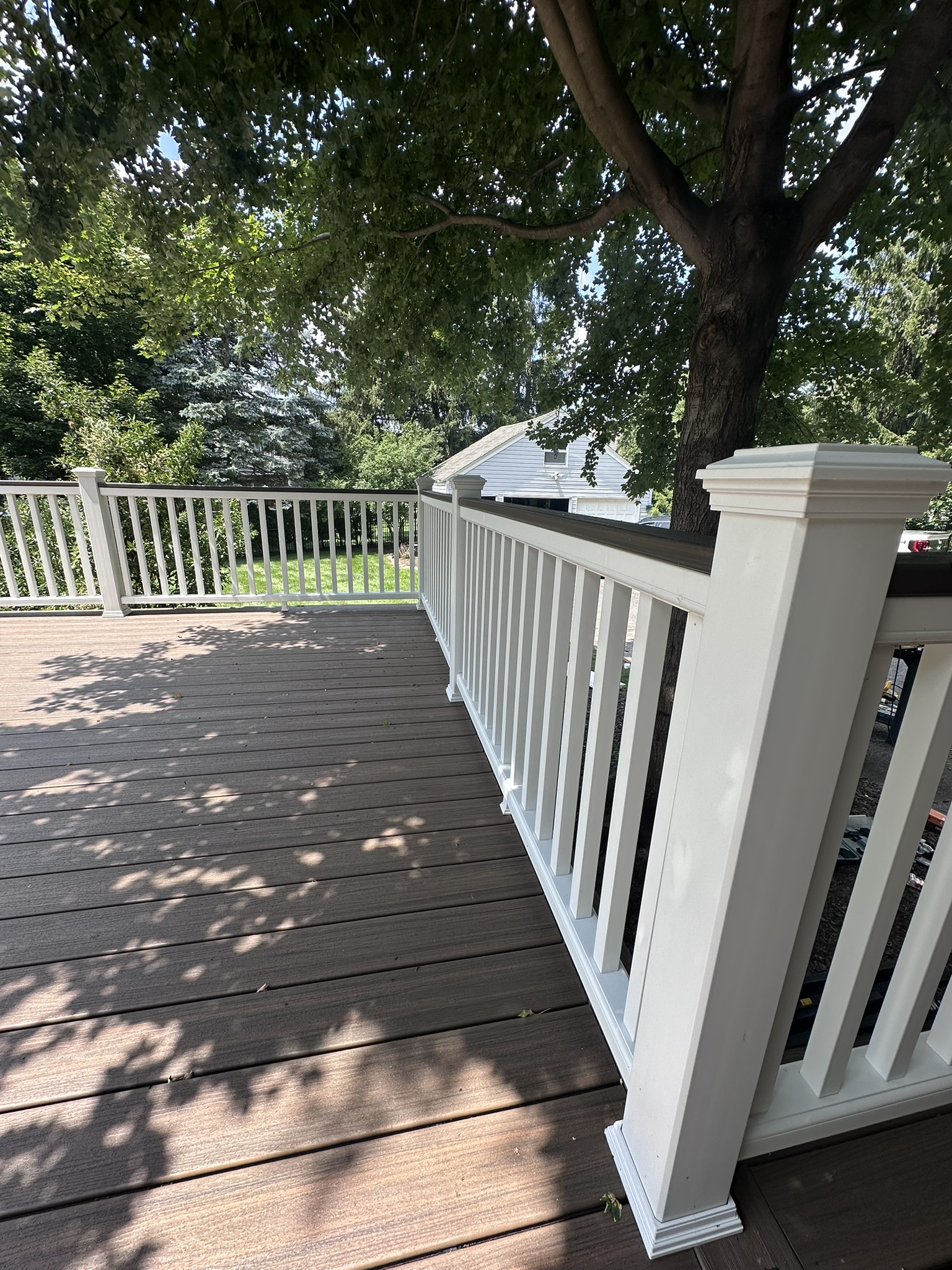
The railings and the cocktail board are Trex Transcend; the deck boards are Trex Enhance. That split is deliberate.
Transcend is the premium line. It is on the rail because the rail is the part of a deck people actually touch — the thing you lean on, and the flat 2×4 cocktail board you put a drink on. Enhance is the value line and it is underfoot, where you get the same composite performance across the largest area of the job without paying premium rates for square footage nobody runs their hand along.
Spending the same money evenly across a deck is easy. Putting it where wear and contact actually happen takes a decision.
Scope of work
- Existing decking and railings removed
- Frame inspected and corrected — loose railing posts made solid, missing blocking installed
- Stairs given proper bearing instead of sitting on soil
- Joist tape applied across the frame
- New Trex Enhance decking with a mitred picture-frame border
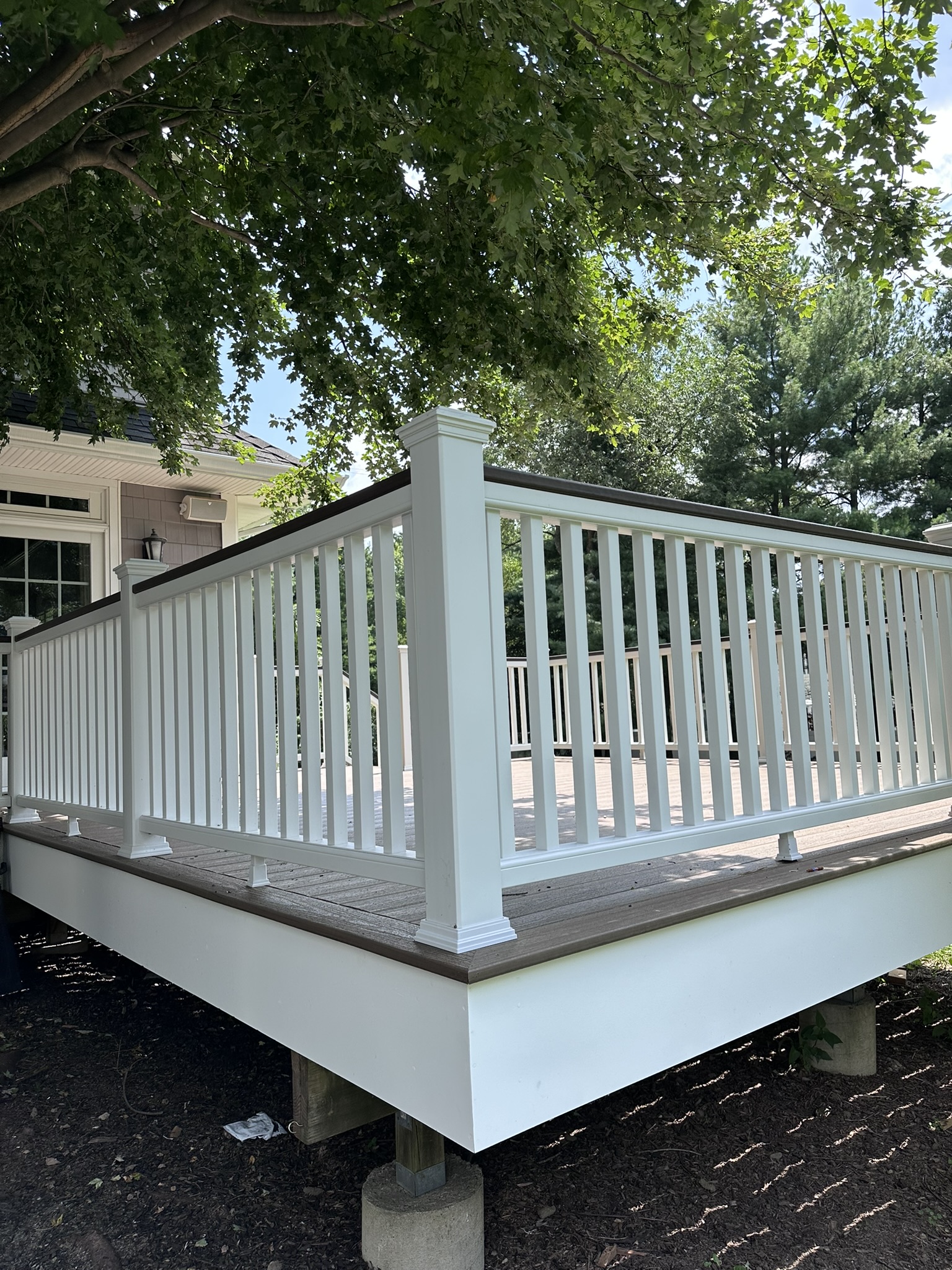
- New Trex Transcend railings with capped newel posts
- 2×4 Trex Transcend cocktail board carried around the full rail
- Custom cascading entry stairs built to wrap the corner
- Fascia and skirting to the raised structure
See all deck building services — or read the Montclair kitchen renovation.